 Save
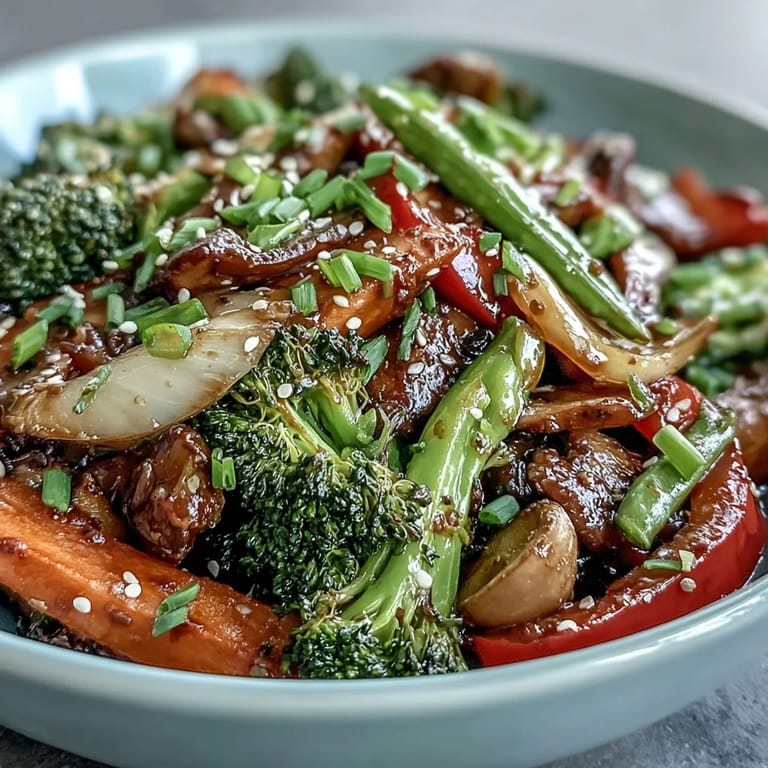
Save My neighbor knocked on my kitchen door one evening asking if I had any vegetables she could borrow, and instead of handing over a bag, I insisted on making her dinner right then and there. Twenty minutes later, the smell of ginger and garlic had filled the entire apartment building, and she was standing at my stove watching me toss bright peppers and snap peas like they were the easiest thing in the world. That's when I realized this ginger stir-fry had become my go-to move—not because it's fancy, but because it transforms whatever vegetables are sitting in your crisper drawer into something that tastes like you actually tried.
I made this for my sister when she was visiting and claimed she wasn't hungry—then she ate two full bowls and asked for the recipe before dessert. The moment I saw her reach for seconds without being asked, I knew this dish had that rare quality of being both simple enough for a Tuesday night and special enough to feel like you're taking care of someone.
Ingredients
- Broccoli florets: Cut them smaller than you think you need so they cook through and get slightly caramelized at the edges.
- Sliced carrots: Slice them on a diagonal or thin bias so they cook faster and look more elegant without any extra effort.
- Red bell pepper: The sweetness balances the ginger and soy, making the whole dish sing instead of just tasting savory.
- Snap peas: These stay crisp if you add them near the end, which means you get that satisfying crunch that makes the dish feel fresh.
- Yellow onion, thinly sliced: Thin slices mean they caramelize quickly and disappear into the sauce rather than being chewy.
- Sliced mushrooms: They soak up the sauce like little flavor sponges and add an earthy depth that rounds out the brightness.
- Fresh ginger, finely grated: This is where the magic lives—buy a piece of fresh ginger root and grate it yourself because the flavor is exponentially better than pre-minced.
- Garlic, minced: Use fresh cloves, not the jarred stuff, because the difference shows up immediately in both smell and taste.
- Soy sauce: Keep tamari on hand if you're cooking for anyone avoiding gluten, but regular soy sauce is the classic here.
- Sesame oil: This is a finishing oil, not a cooking oil, so don't use too much or it overwhelms everything else.
- Vegetable oil: Any neutral oil works, but keep the heat high enough that it shimmers before you add the ginger.
- Rice vinegar: This adds a subtle brightness that keeps the sauce from tasting one-note.
- Maple syrup or honey: Just a teaspoon balances the salty and savory without making it sweet.
- Red pepper flakes: Totally optional, but I love a whisper of heat that sneaks up on you.
- Green onions: Scatter these on top at the very end so they stay fresh and add a little bite.
- Toasted sesame seeds: They add texture and a nutty flavor that elevates the whole dish from good to memorable.
Tired of Takeout? 🥡
Get 10 meals you can make faster than delivery arrives. Seriously.
One email. No spam. Unsubscribe anytime.
Instructions
- Make your sauce while the pan heats up:
- In a small bowl, whisk together soy sauce, rice vinegar, maple syrup, and red pepper flakes if you're using them. I like to keep this nearby so it's ready the moment you need it.
- Get your oil hot and fragrant:
- Heat vegetable oil and sesame oil in a large skillet or wok over medium-high heat until you see wisps of steam and the kitchen smells ready for something good. This takes maybe a minute.
- Toast the ginger and garlic:
- Add your grated ginger and minced garlic, stirring constantly for just 30 seconds—you want the smell to explode out of the pan but not the garlic to brown. This is the moment that makes everything taste like it came from a restaurant.
- Start with the slower vegetables:
- Toss in your onion, carrots, and broccoli florets, stirring them around the hot pan for 2 to 3 minutes so they start to soften and pick up a little color. You should hear them sizzle the whole time.
- Add the quick-cooking vegetables:
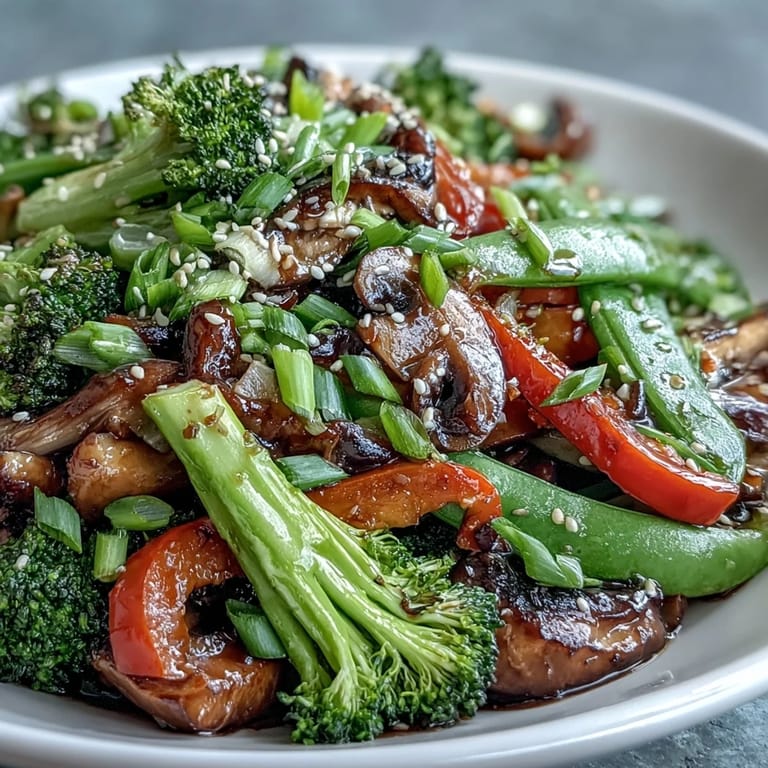
- Now throw in your bell pepper, snap peas, and mushrooms, keeping everything moving for another 3 to 4 minutes until the vegetables are just tender enough to bite through but still have some resistance. The pan should still be loud and alive at this point.
- Pour in the sauce and finish:
- Add your prepared sauce, tossing everything constantly for 1 to 2 minutes so the vegetables get coated and the heat brings out the flavors. You'll know it's done when everything glistens.
- Top it and taste:
- Remove from heat and sprinkle green onions and toasted sesame seeds over the top. Take a bite straight from the pan before serving because that's when it's hottest and best.
 Save
Save There's something about the rhythm of stir-frying that feels meditative once you've done it a few times—the constant motion, the change in smells as each ingredient goes in, the way your whole meal comes together in the time it takes to steam some rice. This dish became my comfort in a busy season, the one thing I could make with whatever was in my vegetable drawer and still feel proud of what was on the plate.
The Secret to Crispy Vegetables
The trick that changed everything for me was understanding that stir-frying isn't actually about cooking things completely—it's about building layers of texture by adding ingredients at different times. Your carrots and broccoli need a head start because they're denser, while snap peas can go in at the last second and still be perfect. Once I stopped trying to cook everything evenly and started thinking about what each vegetable needed, the whole dish became easier and tasted noticeably better.
What to Serve This With
I've served this over jasmine rice, brown rice, noodles, and even cauliflower rice depending on what I had on hand, and it works beautifully every single time. The sauce clings to whatever base you choose, so the pairing feels complete rather than like you're just putting a stir-fry on top of something random. If you want more protein, a block of crumbled tofu or tempeh stirred in at the very end makes it a full meal that holds up for leftovers too.
Variations and Swaps That Actually Work
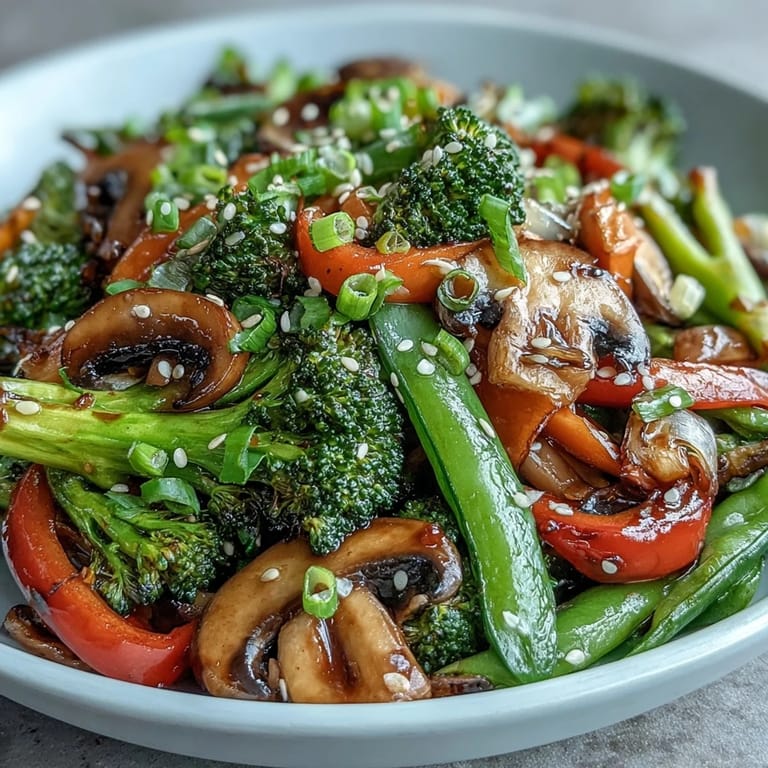
The beauty of this recipe is that it's forgiving enough to work with whatever vegetables you actually have in your kitchen right now. I've made it with zucchini, bok choy, asparagus, water chestnuts, baby corn, and even Brussels sprouts when I was feeling adventurous, and the ginger-soy sauce loves them all equally. The only rule I follow is to keep the heat high and the motion constant, because those two things matter way more than the exact vegetables you choose.
- Add a splash of freshly squeezed lime juice or a teaspoon of lime zest to brighten the whole dish if you want something more citrusy.
- Swap the maple syrup for a teaspoon of white miso paste if you want deeper umami and a more complex sauce.
- Drizzle a few drops of chili oil over the finished dish right before serving if you like heat that builds slowly rather than red pepper flakes.
 Save
Save This ginger stir-fry taught me that the fastest meals are often the ones that taste the best, and that showing up with something hot and fragrant is its own kind of care. Make it tonight and you'll understand why it keeps happening in my kitchen.
Common Questions
- → What vegetables work best for stir-frying?
Broccoli, carrots, bell peppers, snap peas, onions, and mushrooms are excellent choices. They maintain texture through high heat and absorb flavors well while staying crisp-tender.
- → Can I make this gluten-free?
Yes, simply replace regular soy sauce with tamari or coconut aminos. All other ingredients naturally contain no gluten, making this easily adaptable for dietary needs.
- → How do I prevent vegetables from becoming soggy?
Keep your wok or skillet at medium-high heat throughout cooking. Add vegetables in stages based on cooking time, and avoid overcrowding the pan to maintain proper temperature for that signature crisp-tender texture.
- → What protein additions work well?
Firm tofu, tempeh, edamame, or sliced cashews complement these flavors beautifully. Add protein during the last few minutes of cooking to prevent overcooking while allowing it to absorb the savory sauce.
- → Can I prepare the vegetables ahead?
Absolutely. Wash, slice, and portion all vegetables up to 24 hours in advance. Store them in airtight containers in the refrigerator, keeping the sauce ingredients separate until ready to cook for maximum freshness.